New Reliability Score
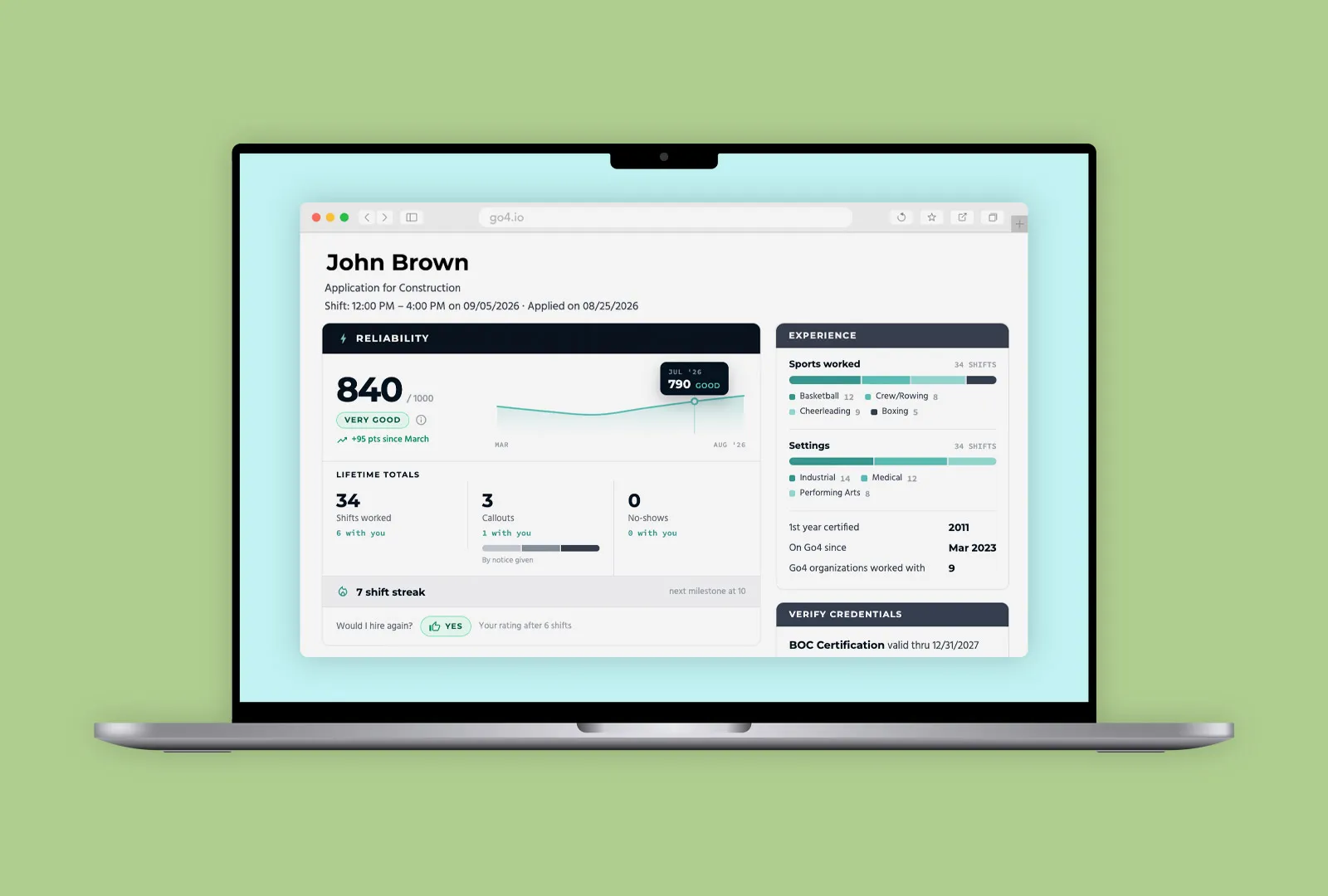
The updated Reliability Score system introduces a behavior-driven and transparent approach to rating an athletic trainer’s performance compared to the prior rigid, percentage-based model. The original system measured reliability as a simple ratio of completed shifts to failed commitments, while the new system better reflects real-world behavior while incentivizing positive actions.
Benefits of the New Reliability Score:
1. A More Accurate Representation of Performance
The previous percentage model treated all failures equally, regardless of severity or timing. The new system differentiates between:
- Early callouts (low impact)
- Late callouts (moderate impact)
- Last-minute callouts and no-shows (high impact)
This creates a more realistic measure of operational risk and aligns the score with the actual impact of actions.
2. Encourages Consistent Behavior
The new system rewards consistency over time through completion streaks, rather than just overall rate.
- Athletic trainers are incentivized to maintain reliability continuously
- A single callout does not permanently dilute a lifetime work
- Positive behavior is actively reinforced, not just passively measured
This shifts the system from static measurement → active behavior.
3. Better Transparency
The previous percentage model was mathematically correct, but wasn’t a great indicator of an athletic trainer’s actual job performance.
The new system is easier to understand because:
- Actions map directly to an athletic trainer’s score
- Streak milestones provide visible goals
- Penalties are clearly defined and predictable
- Users can track exactly how their score changes—and could change—over time
This increases trust in the system and reduces confusion.
4. Reduced Volatility
The percentage-based scores were highly sensitive to low volume:
- A single call out drastically impacted new athletic trainers and athletic trainers that had not worked a lot of jobs.
- Early behavior disproportionately affected an athletic trainer’s long-term score
The new system mitigates this by:
- Starting from a stable baseline
- Using additive adjustments instead of ratios
- Avoiding extreme swings from small amount of jobs worked
5. Aligns Incentives with Action
The new system directly encourages behaviors that improve platform performance:
- Accepting shifts responsibly
- Avoiding late cancellations
- Showing up consistently
- Maintaining long streaks of reliability
This creates a tighter alignment between:
- Individual incentives
- Platform stability
- Customer (JP) experience
6. Supports Forward-Looking Evaluation
The new system is inherently time-aware and forward-moving:
- Scores evolve based on recent behavior
- Historical performance provides context, not permanent penalty
- Users are evaluated on what they are doing now, not just what they did in the past
Summary
The new Reliability Score system improves upon the previous model by:
- Reflecting the true impact of user behavior
- Encouraging consistent, high-quality participation
- Providing clear recovery pathways
- Reducing volatility and confusion
- Aligning incentives with marketplace success
Overall, it transforms reliability from a passive metric into an active system that drives better outcomes for both ATs and the platform.
Other articles you might like

Tournament Operator Series: 7 Things That Should Be at HQ
The Go4 platform is focused on connecting organizations with athletic trainers and insights to help those organizations operate at a higher level. We’re sharing the accumulated knowledge of veteran tournament operators, coaches and club managers. Check out the list of 7 Things That Need to be at…
Go4’s Upgraded Platform
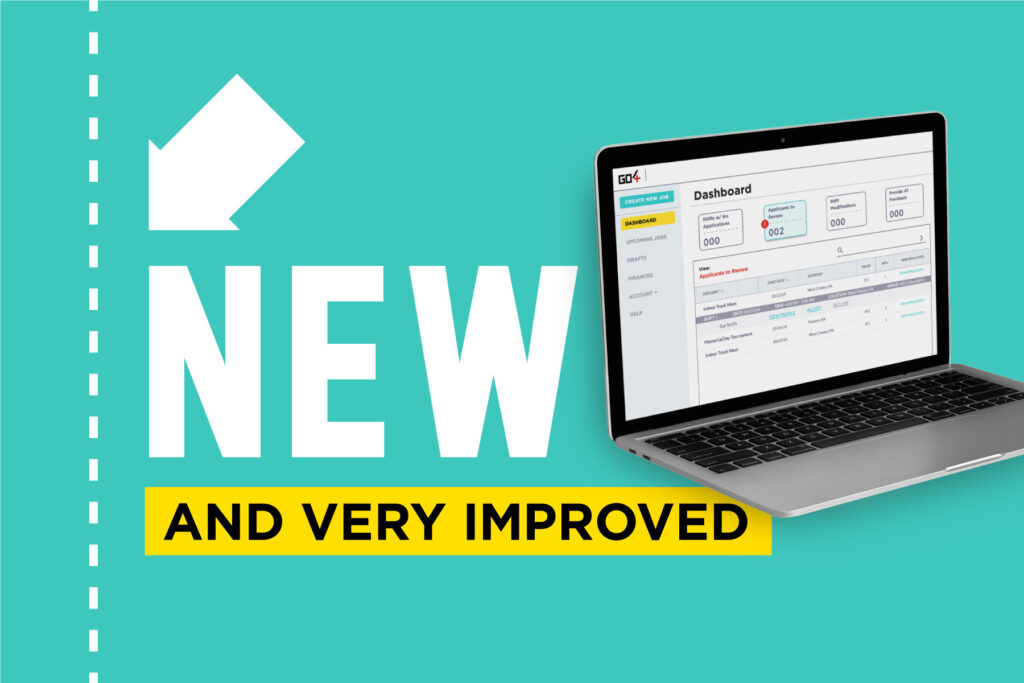
Go4’s Upgraded Platform Launches At Go4.io, we’re always striving to enhance our platform to better serve the athletic training community. We’re thrilled to announce that this version 3.0 of the Go4 platform is live, packed with new features and improvements designed to revolutionize the way organizations hire…

Why Go4 doesn’t set a minimum rate.
As the largest job board in the country for athletic trainers, Go4.io is not just a marketplace; it’s a movement. A movement towards better opportunities, fairer wages, and greater control over one’s professional journey. And that’s why Go4 doesn’t set a minimum rate. 1. The Power of the Marketplace…