Does the case for helmet add-ons add up?
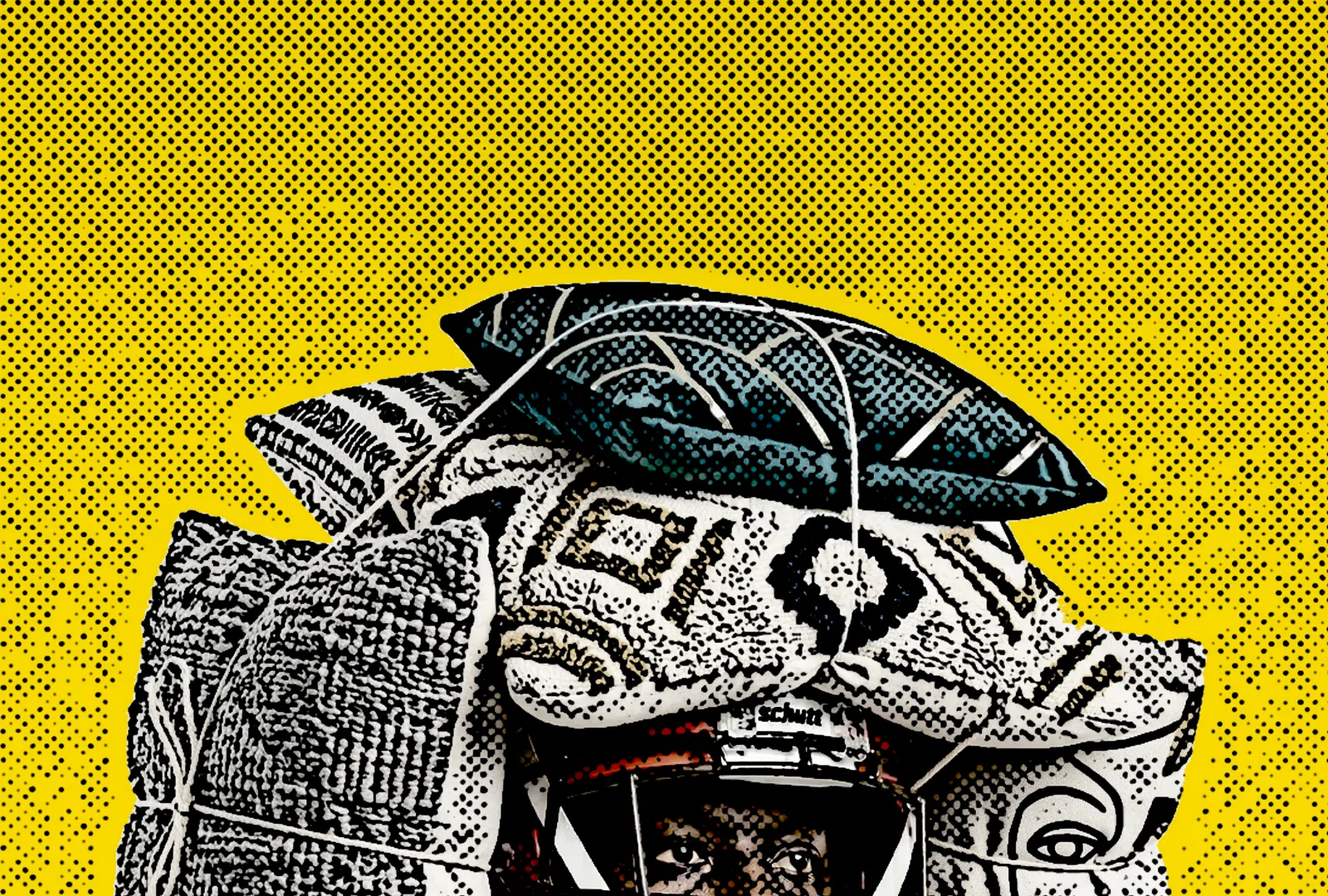
The NFL draft has come and gone. The college portal is closed. Spring football – other than the UFL – is done. Over the next couple of months, then, preparation for the fall season will be the order of the day for football programs at all levels across the country.
Part of that preparation involves deciding what equipment purchases to make. And for the last decade or so, athletic trainers have been among those determining whether or not helmet add-ons should be included in the budget. With the way the NFL has embraced their use, they at least deserve some serious consideration.
In July 2013, not long after they first hit the market, I received a press release from the manufacturer of the Guardian Cap claiming their product was “a device that was invented to reduce helmet collision momentum transfer.”
According to the guardian.com website back then, the add-on was “a one-size fits all (padded) helmet cover.” The press release went on to promise, “the device can reduce head impact by as much as 33 percent.”
Sounded like a good thing.
So good in fact that colleges and high schools across the country had already purchased 8,000 of the devices in 2012.
The lower-profile ProTech add on – a descendent of the 1990s ProCap — soon followed but experienced multiple ownership changes until it was acquired by SAFR Sports in 2021. More recently the device was renamed to match its maker. Popular in the Philadelphia area among high schools – where SAFR Sports is based — and adopted by multiple college teams, the SAFR device will supposedly prevent concussions according to its manufacturer.
That is a claim that the owners of Guardian Cap have declined to make. They only promise that their products will reduce impacts and redirect rotational forces.
Nonetheless, when it came to the race to impress the NFL, Guardian Cap pulled ahead of ProTech/SAFR in 2017 when it won the league’s HeadHealthTECH challenge, earning a $20,000 prize that would help cover further laboratory testing of the device.
In 2022, Guardian Cap crossed the finish line first when the NFL mandated that its linemen, tight ends, and linebackers wear the device in practice during the first four weeks of training camp.
The league based its decision almost entirely on the results of two studies — out of a commercial testing laboratory affiliated with the league — published in one article in Annals of Biomechanical Engineering (ABE) the year before. At the time the mandate was instituted, NFL Chief Medical Officer Dr. Alan Sills focused on one particular conclusion of the first study that read, “In linear impactor tests, the (Guardian Cap) NXT reduced head impact severity as measured by the head acceleration response metric (HARM) by 9% relative to the helmets only, while the ProTech reduced HARM by 5%.”
Nowhere near, by the way, the 33% reduction cited in that 2013 press release.
It is worth noting at this point that the 12-ounce NXT was a new device. The original Guardian Cap model was the 7-ounce XT, which continues to be marketed to high school teams and is available to the general public. The NFL had asked for the development of a heavier model because their lab testing had determined the XT did not work to their satisfaction. Since hitting the market, the NXT is sold only by dealers and is marketed to college and professional teams.
Left unmentioned by the NFL officials, as they justified their mandate, was another conclusion of the first study featured in the ABE article. The authors wrote, “While both products significantly improved the performance of the football helmets tested overall, effects varied by impact condition and helmet model with the add-ons worsening helmet performance in some conditions.”
The second study looked at helmet-to-helmet blows and generally found that two helmets, each covered with an NXT, generally netted an 18% reduction in HARM. Soon, Dr. Sills would be rounding that number up to 20% in his public comments. However, he would neglect to mention the additional findings of the second study which read in part, “(P)erformance for helmet-to-helmet impacts with eccentric impact vectors … resulted in a mixture of increased and decreased HARM when either add-on was placed on one or both helmets. Estimated risk for serious neck injury with add-ons and without differed by less than 4% for these eccentric impacts.” (More on risks to the cervical spine later.)
A more recent study out of Virginia Tech and published in ABE in 2024 essentially confirmed the results published in the 2021 ABE article, while adding the Guardian Cap XT to the mix and showing that it performed nowhere nearly as well as the NXT or SAFR.
In the wake of the more recent study, The New York Times reported, “Stefan Duma, who leads the (Virginia Tech) lab, said the smaller reductions, combined with better helmets and fewer full contact practices, suggested that the benefits of wearing the XT were negligible. ‘We tested it thoroughly, and the benefits are just not there,’ Dr. Duma said. ‘It’s all noise, no statistical difference in youth.’”
As promising as the laboratory studies had been for the Guardian Cap, especially the NXT version, results of on-the-field studies would be needed to provide real proof of add-on benefits.
As soon as the end of the 2022 season, the NFL began trumpeting a 50% decrease in practice-related concussions for players wearing the NXT. As a result, in 2023, the mandate was extended to running backs and all contact practices. By 2024, only quarterbacks and kickers were exempted and the devices were allowed in games.
The apparently significant concussion rate dip and the league’s ongoing Guardian Cap advocacy was the catalyst for high school and youth teams – and parents — to buy hundreds of thousands of XTs. Meanwhile, many college programs jumped on the bandwagon, too, usually purchasing the NXT for their players.
However, neuroscientists remained skeptical of the NFL’s boasts. Robert Stern, Ph.D., the Director of Clinical Research at Boston University’s Chronic Traumatic Encephalopathy Center was interviewed in the November/December 2023 issue of the Health Journal of Baton Rouge. Of the NFL’s Guardian Cap mandate and the supposed reduction in concussion numbers, he said, “It’s just a PR stunt. I don’t know how they did their assessment,” he explained, “the number of concussions with and without — obviously it cannot be that controlled or sound, like a placebo-controlled study, because everyone knows who’s wearing a Guardian Cap, including the person who’s going to diagnose the concussion… And unless there’s some kind of randomization, unless there’s some kind of objectivity to it, we can’t really know.”
Earlier in 2023, three studies regarding the efficacy of Guardian Caps at the collegiate level were published and provided results that brought us closer to really knowing.
A study out of Stanford and published in ABE reported that the Guardian XT reduced forces in a laboratory setting — depending on the speed of the hit — by 10-25%.
“However, on the field,” the authors continued, “no significant differences in any measure of head impact magnitude were observed between bare helmet impacts and padded helmet impacts.”
North Carolina researchers looked at the NXT — comparing players who did and did not wear the device — and published their work in the International Journal of Environmental Research and Public Health. They concluded, “Protective soft-shell padding did not reduce head impact kinematic outcomes in college football.”
Then, the Journal of Athletic Training offered an investigation of the NXT by the School of Public Health at the University of Nevada. In conclusion, the scientists wrote, “These data suggest no difference in (forces) when Guardian Caps are worn. This study suggests Guardian Caps may not be effective in reducing the magnitude of head impacts experienced by NCAA Division I American football players.”
In 2025, the scientific hits to the reputation of the Guardian Cap kept on coming. In January, the British Journal of Sports Medicine (BJSM) published a study out of the University of Wisconsin on the XT’s effectiveness at preventing concussion. Over the course of the 2023 season, the UW researchers followed 2610 high school football players on 41 teams across the Badger state. Roughly half the teams used the add-ons in practice and the other half did not. They were not used by either group in games.By the time the season ended, the concussion rate was exactly the same between groups in practice. The concussion rate in games was far higher in games but, again, exactly the same between groups.
In June, the University of North Carolina and the University of Georgia combined efforts, publishing the results online of an on-field college study of the NXT in Medicine & Science in Sports & Exercise. The authors found, “The Guardian Cap had no on-field effect on head impact magnitude or frequency.”
However, the coup de grace came a month later. On July 2, in the American Journal of Sports Medicine (AJSM), the NFL finally published its data regarding the effect of the Guardian Cap mandate. NFL Chief Medical Officer Dr. Allen Sills and NFLPA Chief Medical Director Dr. Thom Mayer were among the co-authors. Their article reported that, ever since the devices were mandated by the NFL in preseason practices in 2022, there had been a 54% to 62% reduction in overall incidence of concussions occurring in practices. However, for concussions involving blows to the helmet (rather than to the facemask, which is not covered by the Guardian Cap) the rate remained unchanged, and the authors admitted, “the reduction in concussions could not be attributed solely to the energy absorbing effects of the Guardian Cap NXT.”
The subsequent silence from the league’s public relations machine was thunderous.
I was the first to report on the study — a full month after it was published — in my weekly sports medicine column in The Times of Northwest Indiana. I had stumbled on it during an online literature search. Not until Oct. 30 did a national media outlet, USA Today, publicize the study’s results. In that article, authored by Josh Peter, New York University medical ethicist Arthur Caplan, a critic of the NFL when it comes to concussions, said of the Guardian Cap study, “I’m concerned that if it didn’t really show credible and warranted evidence that the caps were helping, that maybe there hasn’t been a rush to bring the study forward.”
As November started, the Louisville Courier Journal picked up the story. CJ reporter Stephanie Kuzydym, known for her 2023 “Safer Sidelines” series, wrote a pair of articles. In the first, she interviewed Sills. On the one hand, he admitted that when league engineers tested the XT, “they did not find that it reduced force the way the NXT model did.”
Yet, he also said, “If I had a high school player right now, would I want them to wear a Guardian Cap? You bet. Absolutely.” Interesting advice given his previous admission and Dumas’ comments. As for the results of the study he co-authored, Sills did not address the outcome directly, only saying, “We want the world to know what we’re finding and how we’re finding it and what the data is on that and we are an absolutely open book.”
Then why no announcement about the study’s results by the league in the days following its publication?
Within days of Kuzydym’s reporting, though, Sills did issue a press release that continued to tout the “benefit” of wearing a Guardian Cap. Buried at the bottom of the release was a reference to the AJSM study but not a word about the study’s conclusion which read, “There was no significant association between Guardian Cap NXT use and the reduction in concussions.”
In February of this year, Mayer and I had a wide-ranging discussion. When the topic turned to the AJSM study he co-authored he said, “It’s a classic case of the difference between causation and correlation.”
When I asked him about the findings of the numerous other field studies at the college and high school levels that have similarly failed to demonstrate a decrease in force transmitted to the brain or in number of concussions, Mayer answered, “I agree. Personally, I think (the NFL’s Guardian Cap mandate) is an evolutionary step.”
NFL executive vice president Jeff Miller admitted as much in an article in Wired in late 2024. “The Guardian Cap could be a transition as we move from good helmets to better helmets,” he said, “as that technology continues to improve.”
Faced with the growing evidence that Guardian Caps fail to demonstrate any on-field benefit, some stakeholders have justified their continued use by noting that at least they don’t cause any harm.
I would reply that players complain of neck pain and overheating from their use.
More ominously, two high school players suffered catastrophic brain injuries while wearing Guardian Caps during games in 2024. Furthermore, Cleveland Brown Jeremiah Owusu-Koramoah was wearing the device when he suffered a severe neck injury during a game in October 2024. In May, he was placed on the Reserve/Physically Unable to Perform list, meaning he will miss a second season in a row due to a severe neck injury. The All Pro linebacker’s playing career is likely over. Was his misfortune the realization of the “estimated risk for serious neck injury” mentioned earlier?
We’ll probably never know for sure and the evidence provided by these three tragedies is admittedly anecdotal and not scientific proof.
However, as last year was coming to an end the Southern Economic Journal featured a study out of Ball State and Syracuse entitled, “Concussed: Unintended Consequences of the Guardian Cap Mandate in the NFL.”
The authors tallied the reported concussions in the NFL during the 2021, 2022 and 2023 seasons. Contrary to NFL claims, their analysis found — according to a Dec. 8 Ball State press release — there was “no reduction in overall concussion rates following the Guardian Cap mandate. Instead, concussions (during games) among the positions required to wear the caps increased relative to pre-mandate seasons.”
The jump was not small, with the authors estimating 36 additional concussions occurred per season due to the mandate.
The press release continued, “the increase may reflect a ‘false sense of security’ during practice” that led to riskier and more reckless play that continued in games, when the devices were not being used.
“The NFL should focus on policies that reduce the number of injuries by incentivizing players to take on less risk,” the authors (both are economists) concluded. “It is in everyone’s best interest — the league, franchises, players, and fans — to fully understand the unintended consequences of polices like the Guardian Cap mandate.”
So, what is an athletic trainer to do? I put the question to NATA President A.J. Duffy in March. He said athletic trainers should evaluate the science when deciding whether or not to purchase helmet add-ons for their football players. When he was the head athletic trainer at Widener University (for 34 years until Oct. 2024), his decision was not to buy.
Athletic trainers advising youth programs should be aware that, in 2027, NOCSAE is putting a weight limit of 3.5 pounds on youth helmets. The measure is intended to limit the momentum of the head/neck complex and to reduce neck fatigue, according to Thad Ide, the Chief Product Officer for Riddell. Helmet add-ons will cause youth helmets to exceed that weight maximum.
The advice from the authors of the 2025 BJSM high school study is, perhaps, the best of all. “Athletic departments and other stakeholders should be cautious of promoting devices with uncertain on-field effectiveness,” they wrote. “Furnishing a football team with equipment with unproven benefits may provide false reassurance to parents that their children are protected from sports-related concussion (SRC). Similarly, athletes may play more aggressively because they feel protected by wearing a Guardian Cap. It also might divert resources away from evidence-based measures that can reduce SRC incidence and improve health outcomes such as employing athletic trainers or considering rule changes.”
John Doherty, a licensed athletic trainer and physical therapist, is the Vice President of Therapy Services and Sports Medicine for Powers Health in Northwest Indiana and the sports medicine columnist for The Times of Northwest Indiana. This column reflects solely his opinion. Reach him at jdoherty@powershealth.org. Follow him on X (formerly Twitter) @JDohertyATCPT.
Other articles you might like
Tournament Operator Series: 7 Things That Should Be at HQ
The Go4 platform is focused on connecting organizations with athletic trainers and insights to help those organizations operate at a higher level. We’re sharing the accumulated knowledge of veteran tournament operators, coaches and club managers. Check out the list of 7 Things That Need to be at…

Go4’s Upgraded Platform
Go4’s Upgraded Platform Launches At Go4.io, we’re always striving to enhance our platform to better serve the athletic training community. We’re thrilled to announce that this version 3.0 of the Go4 platform is live, packed with new features and improvements designed to revolutionize the way organizations hire…
Why Go4 doesn’t set a minimum rate.
As the largest job board in the country for athletic trainers, Go4.io is not just a marketplace; it’s a movement. A movement towards better opportunities, fairer wages, and greater control over one’s professional journey. And that’s why Go4 doesn’t set a minimum rate. 1. The Power of the Marketplace…