4 Systems to Put in Place for the New School Year
Every August, athletic trainers start the season from wildly different places. Some are walking into a brand-new building with a brand-new title. Some are back in the same athletic training room for the fifteenth year and could find the tape and scissors blindfolded. Some have a budget that lets them say yes to everything. Some have a wish list longer than the football roster.
While the needs of each AT vary from position to position, there are a few systems that can benefit you whether you are new or returning across all budget levels. Build these 4 systems into your daily and weekly routines: Not necessarily what to do, but how to keep doing it when things get hectic and you’re running on adrenaline and a (possibly expired) Gatorade bar.
1. Build a communication cadence, not just a communication plan
Everyone sets up a group text or an email list in week one. The system that is still operating in October is the one with an established, recurring cadence.
- Pick a standing day for coach and/or AD check-ins. Even five minutes at the same point every week (end of Monday practice, before Thursday walkthrough) beats a “let me know if anything comes up” open door that never gets used until something’s already wrong.
- Decide your escalation path before you need it. Who gets the call for a same-day injury update, parent first or coach first? AD or admin cc’d on what? Write it down once so you’re not making that call at 6pm with a kid on the table.
- Over-communicate in September so you can under-communicate in November. The relationships and trust you build in the first few weeks are what let a quick “resting him today” text be enough later, instead of a full explanation every time.
2. Organize for the version of you that’s exhausted in week eight
Whatever system you set up in the first week of August needs to work for the version of you that hasn’t had a day off in nine days.
- Simplify your documentation before the season, not during. If your injury tracking, EAP access, or return-to-play notes require more than a couple clicks or a folder you have to dig for, fix it now. You will not have the bandwidth to fix it in October.
- Set up your space for the worst day. Where’s your ice, your EAP, your emergency contact list, if you’re not the one standing there? Is it always in the same spot? Somebody else, a coach, a parent, a colleague covering for you, should be able to find it without a scavenger hunt.
- Triage the wish list instead of shelving it. If your budget’s thin, don’t let “we don’t have everything” turn into “so I won’t ask for anything.” Keep a running list, ranked by what truly impacts patient care versus what’s nice to have, and bring it up on a schedule, not just when something breaks. Then, if the money does become available, you won’t have to think about it, and your admin will already know too.
3. Protect a weekly rhythm, even a small one
The season doesn’t slow down to let you build good habits later. Whatever rhythm you want to have in November needs to start now, while there’s still room for it.
- Give yourself one non-negotiable planning block a week. Ten minutes on a Sunday or Monday morning to look at the week’s practice and game schedule and flag conflicts, coverage gaps, or kids you need to check back in on, before the week starts. Protect this time at all costs.
- Build in a real stopping point. Not a day off necessarily (that might not be a realistic ask in August), but a moment that marks the end of the workday so it doesn’t just bleed into the next one. Something as simple as a drive home with no phone calls.
- Batch the administrative tasks instead of letting them trail you. Notes, cleaning, injury logs: pick one time block to do them instead of chipping away in stolen minutes between athletes. It’s the difference between admin work being a task and admin work being a low hum of guilt following you around all day.
4. Don’t lose the why in the minutiae
This is the one that’s easy to skip and the one that matters most by October. Somewhere between the fifteenth ankle taping and the parent email about a past-due physical, it’s easy to lose track of why you took the job in the first place.
- Write down your one sentence now, while you have the headspace for it. Why this job, this season, this team? You don’t need to revisit it daily, just somewhere you’ll stumble back onto it in week ten.
- Keep a running list of small wins. The kid who came back from an ACL, the parent who said thank you, the moment you caught something before it became a bigger problem. The job produces plenty of these; the chaos just makes them easy to miss in real time.
- Notice when you’re only talking about the job in terms of what’s going wrong. That’s usually the first sign you need one of the other three habits more than you need another task on the list.
Pick one…
None of this needs a budget, a title, or a certain number of years on the job. It needs ten minutes now, before the season swallows the time to set it up.
Pick one system from above, just one, and build it this week to set yourself up for a better headspace in November.
Other articles you might like

Tournament Operator Series: 7 Things That Should Be at HQ
The Go4 platform is focused on connecting organizations with athletic trainers and insights to help those organizations operate at a higher level. We’re sharing the accumulated knowledge of veteran tournament operators, coaches and club managers. Check out the list of 7 Things That Need to be at…
Go4’s Upgraded Platform
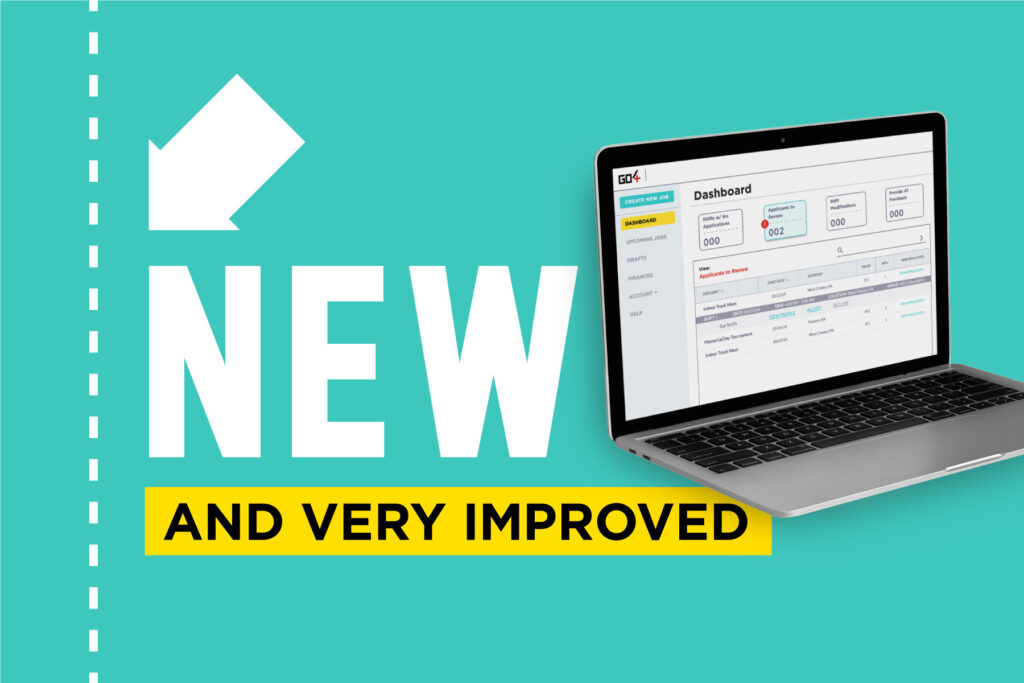
Go4’s Upgraded Platform Launches At Go4.io, we’re always striving to enhance our platform to better serve the athletic training community. We’re thrilled to announce that this version 3.0 of the Go4 platform is live, packed with new features and improvements designed to revolutionize the way organizations hire…

Why Go4 doesn’t set a minimum rate.
As the largest job board in the country for athletic trainers, Go4.io is not just a marketplace; it’s a movement. A movement towards better opportunities, fairer wages, and greater control over one’s professional journey. And that’s why Go4 doesn’t set a minimum rate. 1. The Power of the Marketplace…